
February 3, 2026
From the Field
New Theatre Worker Survey
 Theatre Communications Group’s recent report, Heart, Hustle, Survival: A Survey for Theatre Workers, provides critical, field-informed data on the economic realities facing theatre artists and workers—insights highly relevant to state arts agencies and public arts funders. Based on a survey of 188 primarily New York City based theatre workers, the report examines income, employment precarity, health care, housing and safety, alongside the balance between mission-driven “heart” work and income-sustaining labor. Findings point to persistent gaps between earned income and living or thriving wage benchmarks, with nearly three-quarters of respondents considering leaving the theatre field due to financial strain. At the same time, the report underscores the role of public systems—such as health care access, housing protections and relief funding—in supporting cultural workers’ stability, highlighting opportunities for solutions that strengthen the arts ecosystem and the communities it serves.
NEA Study of Local Arts Agencies
A new report from the NEA, Conduits and Catalysts: Exploratory Findings from a National Study of Local Arts Agencies, shares highlights from a preliminary study on the national landscape and needs of local arts agencies (LAAs). The preliminary qualitative research—based on a series of listening sessions with 32 LAAs from 18 states and Puerto Rico—covers key topics including LAA identity; organizational structure; economic, social and cultural impacts; and funding challenges and approaches.
Initial findings from the listening sessions revealed common strategic opportunities, such as engaging more in rural areas, and common challenges, such as securing sustainable operating revenue. LAAs reported varied funding sources, including government grants, foundations, corporate sponsorships, fundraising events and local tax measures. The findings also indicate that the needs of LAAs can differ based on organizational structure and embeddedness in government. Nonetheless, the report notes that one of the more substantial themes across listening sessions was the desire for LAAs to connect with each other, with many expressing a desire for public and private funders to support more of these opportunities.
The report is accompanied by a working national list of LAAs, available separately for download.
Most Arts-Vibrant Cities in 2025
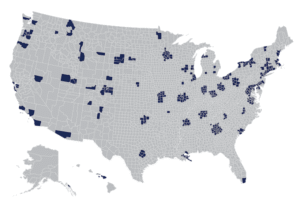 SMU DataArts recently released updated data from the Arts Vibrancy Index comparing the level of demand and supply of arts as well as government support across all 50 states. The index is accompanied by a Data Explorer that provides more detailed information about all states and the top 100 communities, including the number of independent artists, total compensation and total government support.
The vibrancy assessment consists of rubrics covering aspects of supply, demand and public support for arts and culture. Values are adjusted on a per capita basis and differences in cost of living are accounted for as controls.
Few states changed ranking from previous years. SMU DataArts notes that high arts vibrancy states tend to feature dense urban populations and lower poverty rates, though there are notable exceptions, such as New York, which has a higher-than-average poverty rate. Meanwhile, states from every region of the nation populate the top 20 list, underscoring that vibrant arts and culture is not limited to certain areas of the country.