

City Arts-Sector Trends
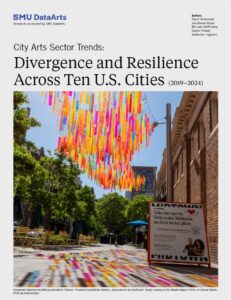 In a new report, City Arts Sector Trends: Divergence and Resilience Across Ten U.S. Cities (2019–2024), SMU DataArts examines the fiscal and operational trends of the nonprofit creative sector in 10 cities across the United States: Atlanta, Cleveland, Des Moines, Houston, Los Angeles, New York City, Philadelphia, Phoenix, Sacramento and Seattle. Drawing on data from over 4,400 arts and culture nonprofits from 2019-2024, the report details a widening gap in the fiscal health of the sector among cities, with some cities and segments of the field stabilizing or growing, while others are navigating significant contraction.
For instance, the gap between the highest- and lowest-performing cities’ average revenue widened 117% from 2019 to 2024. Moreover, pressure is not evenly spread across the field, even within cities. Due to revenue declines, staffing structures and facility costs, midsized organizations, performing arts groups and downtown institutions tend to face the steepest ongoing pressure across cities. Nevertheless, the report finds public investment has an outsized impact on sector health, with consistent local public investment being closely associated with stronger sector outcomes. While local government support covered only about 5% of average organizational expenses in 2024, cities with sustained or growing public arts funding saw stronger financial and attendance outcomes.
League of American Orchestras Conference Recordings
 The League of American Orchestras recently released its 2026 conference session recordings. The sessions from the national annual conference, which took place in June, offer unique insights into different aspects of the orchestral field and span a range of topics. Sessions include:
- Establishing Your Own AI Policy and Protocols
- Advocacy and the Art of Creative Partnerships
- The New Landscape for Charitable Giving Incentives
- Orchestras in Health and Well-Being, From Intention to Practice
Public Humanities and State Humanities Councils
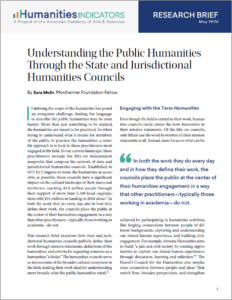 What do the public humanities entail in practice? How do state humanities councils understand the term public humanities, and how can this enliven the humanities in general? In a research brief, Understanding the Public Humanities Through the State and Jurisdictional Humanities Councils, as part of the Humanities Indicators project from the American Academy of Arts and Sciences, Pforzheimer Foundation Fellow Sara Mohr examines how state and jurisdictional humanities councils publicly define their work through mission statements, definitions of the humanities and criteria for regarding someone as a humanities “scholar.”
Through interviews and textual analysis, Mohr draws a distinction between academic and state councils’ conception of public humanities. While academic definitions often center the university and centers of higher education as the primary agents of sharing knowledge and educating the public, state councils emphasize mutual participation that can foster a healthy civic life, and position themselves facilitators in the cocreation of humanities knowledge. State councils will often deploy in their mission statements, for example, words like understand paired with verbs such as define, appreciate, express, interpret, evaluate, help and connect. This expansive, community-oriented definition of the humanities by state councils reflects their service to the public. As Mohr writes, state humanities councils are “equipping [the public] with the tools they need to cocreate with experts in the field, and helping them master the skills that will allow them to make sense of their world and take an active role in composing it.”