| Wednesday, October 7 | |
| 6:30 – 8:00 p.m. | Opening Reception Gather in the hotel lobby for bus loading to the opening reception, beginning at 5:30 p.m., and depart at 5:45 p.m. Please note: There are no bus loops for travel to Culture DC. Buses will drop-off and pick-up at the designated time. |
| Thursday, October 8 | |
9:30 – 11:00 a.m.  | Opening Plenary and Roll Call of the States and Jurisdictions Constitution CDE The opening ceremonies begin with a rousing Roll Call of the States and Jurisdictions, followed by a special plenary featuring Mary Anne Carter, chairman of the National Endowment for the Arts (NEA). Chairman Carter joins the Assembly to share the latest developments in the NEA’s work to unlock new opportunities for American communities to thrive through the arts. |
| 11:00 a.m. – 12:00 p.m. | Brunch Constitution A & B |
| 1:00 – 4:30 p.m. | Enjoy extended peer group time at locations across Washington, D.C., designed to encourage meaningful discussion and professional connection. |
| Friday, October 9 | |
| 8:00 – 9:15 a.m. | Informational Session and Open Q&A with the National Endowment for the Arts Constitution A Join NEA staff from the Office of Grants Management, the Inspector General, and Office of Programs and Partnerships for coffee, pastries and conversation focused on award management—including subgrant notice requirements, reporting obligations, subrecipient monitoring and related topics. These are areas that generate recurring questions, and this session is an opportunity to ensure a shared understanding of key requirements and expectations. This session is useful for both new and long-tenured state and jurisdictional arts agency and regional arts organization staff and features an extended open Q&A. |
| 9:30 – 11:00 a.m. | Morning Plenary and 2026 NASAA Leadership Awards Plenary Session: Long-Term Bipartisan Advocacy Strategies How does the arts sector build advocacy that lasts beyond any single election or policy fight? This morning plenary convenes leading national policy and advocacy strategists for a cross-cutting conversation on sustainable, bipartisan approaches at the state and federal levels. Drawing on past battles to protect the NEA, panelists explore how to position the arts for long-term durability in a polarized climate—and how today’s environment, shaped by litigation and regulatory action, differs from eras before it. 2026 NASAA Leadership Awards NASAA Leadership Awards showcase best practices of state arts agencies and regional arts organizations, recognize exemplary leadership and demonstrate how government creatively, effectively and efficiently serves the public through the arts. |
| 11:00 a.m. – 12:00 p.m. | Brunch Constitution A & B |
12:00 – 12:30 p.m.
| Special Performance: Verbal Gymnastics Theatre Company Constitution CDE Verbal Gymnastics Theatre Company, a Washington, D.C.–based improv ensemble, takes your stories and brings them to life with creativity, heart and just the right amount of theatrical mischief. No scripts. No rehearsals. Just talented performers, genuine moments. Come share a true story and watch it be transformed into a one-of-a-kind theatrical experience through the art of Playback Theatre. Stay for the laughter. Leave knowing your life is more entertaining than you thought. |
| 12:45 – 4:45 p.m. | Topical Sessions Choose from a variety of concurrent sessions exploring timely issues, emerging practices and innovative strategies shaping the future of state arts agencies and the arts field. These interactive discussions feature national leaders, peer learning and practical ideas that participants can adapt to their own states and jurisdictions. |
| 12:45 – 2:15 p.m. | |
| Creative Aging, Creative Futures Constitution A This session serves as the in-person launch of the NASAA Creative Aging, Creative Futures Professional Learning Community. Participants consider how views of aging shape the work of creative aging and explore the role of the arts in fostering connection and belonging for older adults. Through a mix of presentations and facilitated discussion, participants reflect on asset-based approaches to aging, consider how these perspectives apply in their own states, jurisdictions and regions, and identify opportunities for state arts agencies and regional arts organizations to strengthen and expand creative aging efforts. | |
| State Innovations: Changing the Game for Artists and Arts Organizations Constitution B Arts and cultural production are valued at over $1 trillion in the United States, yet there is a long-standing absence of viable commercialization pathways that benefit artists and arts organizations. How can state arts agencies be part of a transformation that ensures that the immense economic and social value of the arts results in more viable and sustainable pathways for artists and cultural organizations? State arts agencies, in collaboration with policy entrepreneurs, are addressing this deep structural challenge through training, access to capital and even a new legal entity designed for artists, organizations and collectives. In this session, hear about solutions from leaders in Colorado, where legislation creating a new legal entity for artists and collectives (A-Corps) was just enacted, as well as Connecticut, where the Yale Cultural Innovation Lab and Collective CT are finding new financial pathways for the arts. Participants discuss how these strategies relate to initiatives or needs in their own states. | |
| Supporting Artists Inside and Beyond the Walls: Arts, Incarceration and Reentry Renwick & Bulfinch Join us for an interactive panel and experiential workshop to discover how the arts are being used in transformative ways to support people impacted by incarceration across the country. Learn about the statewide work being done on the West Coast by the California Arts Council and California Lawyers for the Arts. Hear from, and witness, the work of Free Minds Book & Writing Workshop and Ally Theatre Company’s Voices Unbarred programs in D.C. The session also includes a longitudinal research analysis of the work supported by the National Endowment for the Arts. | |
| 2:30 – 3:30 p.m. | |
| Creative Aging as a Cross-Sector Strategy: Building Partnerships for Statewide Impact Constitution A This working session brings together state arts agency leaders and cross-sector partners to explore how creative aging initiatives are being embedded into state systems and cross-sector partnerships. Using brief case examples, presenters outline different partnership models and the conditions that have enabled them to succeed. The session is designed as a practical, hands-on exchange that helps attendees translate models into actionable strategies for building or strengthening creative aging infrastructure. | |
| Dedicated State Revenues: Beyond General Funds Constitution B State general funds comprise more than 75% of all money appropriated to state arts agencies. However, about half of state arts agencies realize revenue from other state government sources, such as special taxes, fees, gaming proceeds or bond issues. While securing public money is always a challenge (and advocacy is always needed!), our field has shown great ingenuity in tapping into nontraditional public funding. This session offers a national overview of dedicated funding mechanisms as well as a chance to discuss strategic considerations for pursuing new revenue streams. Also included is a preview of some new ways that state legislatures are seeking to raise revenues. Come prepared to ask questions and share ideas about emerging opportunities! | |
| Regional Arts and Culture Economic Development: Centering Arts and Culture in Quality of Place Burnham & Latrobe The READI 2.0 Arts and Culture Initiative is a first-of-its-kind, $65 million investment in regional arts and cultural development by the Indiana Economic Development Corporation in partnership with the Indiana Arts Commission, made possible by funding from the Lilly Endowment, Inc. Phase one was the development of regional arts and cultural plans, phase two is the funding of regionally transformative arts and culture projects, and phase three will be investing in targeted capacity building and technical assistance designed to address some of the identified gaps from the first two phases of the initiative. Hear from key initiative partners about the importance of regionalism in addressing quality of place statewide, how the partnership came together, and what they’re learning about how economic development and arts and culture can and should work together. | |
| Arts and Health Strategies in Substance Use Prevention and Recovery Renwick & Bulfinch As communities confront the ongoing toll of substance use disorder and opioid-related harms, arts-based approaches are being used across prevention, treatment and recovery, as well as in pain management and community-based settings. The National Endowment for the Arts anchors this session with findings from its forthcoming update to a 2020 report on arts-based strategies related to pain management and substance use. The update considers both the evolving research evidence and how arts-based approaches are being implemented in practice, including opportunities to strengthen connections among research, evaluation and community-based programs. Panelists will consider what the evidence and emerging practice suggest for state arts agencies and their partners, including opportunities for cross-sector collaboration, evaluation, and support for arts-based prevention, treatment and recovery efforts. | |
| 3:45 – 4:45 p.m. | |
| Strategies for Supporting Creative Aging Teaching Artists Constitution A As creative aging programs continue to grow, organizations are developing new approaches to strengthening teaching artist practice. This session highlights the experiences of Arts for the Aging and The Phillips Collection, exploring approaches to professional learning, peer exchange and teaching strategies that support high-quality creative aging programs. Discussion examines the skills, knowledge and practices that contribute to meaningful engagement with older adults, while sharing lessons learned from each organization’s approach. The session explores how these approaches and insights can be adapted and applied within state and jurisdictional arts agency contexts. | |
| Creative Districts in Action: Data, Partnerships and Scalable Strategies Renwick & Bulfinch Creative districts are powerful tools for community and economic development, but their success depends on strong policy frameworks, cross-sector partnerships and effective local implementation. This session brings together two complementary models: Louisiana’s nationally recognized Cultural Districts Program and Missouri’s partnership-driven approach to rural creative districts. Participants explore how statewide policies, economic impact data and local strategies can align with partnerships across the economic development, historic preservation and tourism sectors to support sustainable creative districts. The session features concise case presentations followed by a facilitated, participant-centered discussion focused on practical application. | |
| Streamlining Grant Making for Greater Impact Constitution B State arts agencies are actively rethinking how grant-making processes can better serve artists, organizations and communities by reducing complexity, reaching more constituents and building capacity. This session brings together peer agency leaders to examine how state arts agencies have reimagined general operating support and program structures at scale, showcasing different strategies for approaching grant-making changes. | |
| From Reactive to Strategic: Leading State Arts Agency Tech Transformation Burnham & Latrobe State arts agencies are operating in a rapidly evolving technology landscape shaped by emerging tools, shifting expectations and the growing influence of artificial intelligence. As these changes accelerate, agencies are balancing immediate operational needs with the longer-term challenge of building and sustaining resilient technology infrastructure that can support grant making, public service and internal operations. This facilitated discussion, led by Kerry Kaleba and Kerry Kennedy, focuses on how state arts agencies are approaching technology infrastructure as a core organizational asset—one that must be adaptable, sustainable and responsive to change. Drawing on experiences from Arizona and Washington, D.C., the conversation explores how agencies are strengthening foundational systems such as customer relationship management systems, improving internal capacity and making strategic technology investments in constrained public funding environments. | |
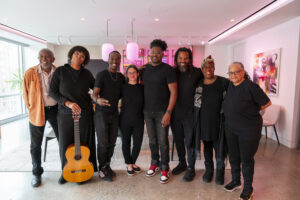
| 5:00 – 6:30 p.m. | NASAA Business Meeting and Closing Performance Constitution CDE After our annual NASAA business meeting, we’ll come together for a powerful closing celebration featuring Black Masala. Blending global rhythms, soulful melodies and the infectious energy of Washington, D.C., Black Masala delivers a vibrant performance that will send us home energized, connected and inspired. |